
My Guide to Apo Island, Philippines
Introduction
This article is essentially me persuading you why you need to add AT LEAST one night on Apo Island to your Philippines itinerary, and more if you can. Plus tips and recommendations for your visit.
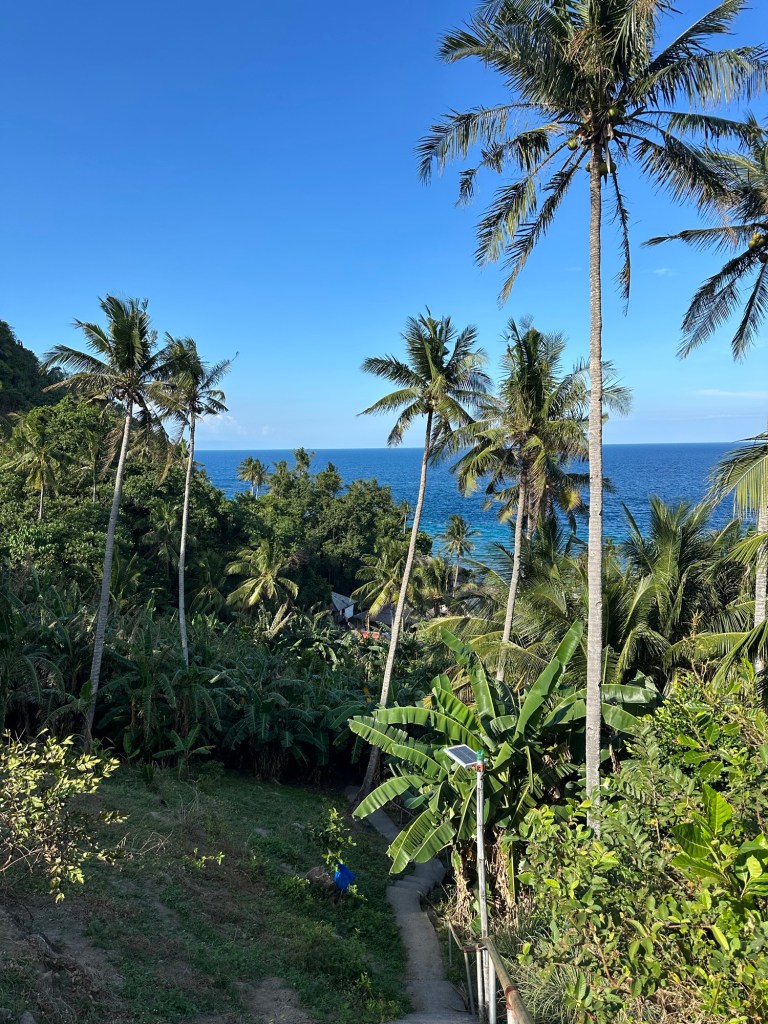
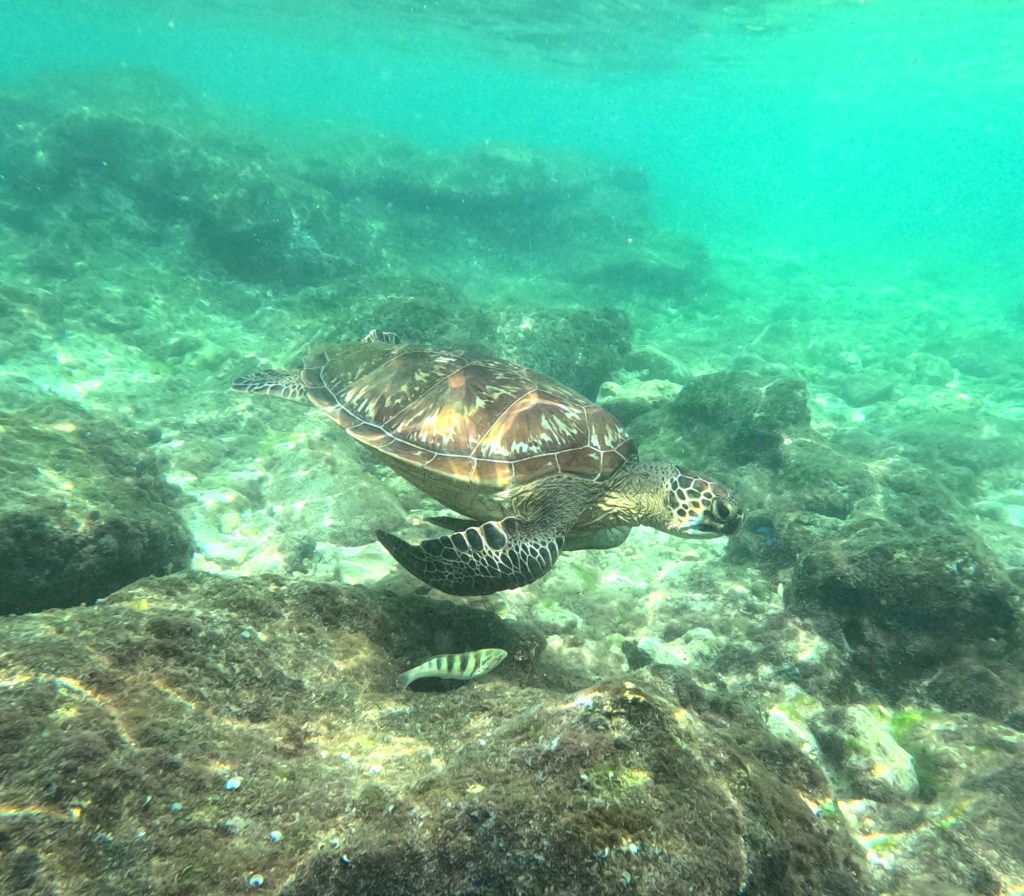
Apo island sits at the south east of Negros island, with the nearest city being Dumaguete. It is absolutely tiny, with a very small resident population. The main reason we came to the island was because we heard the snorkelling was amazing and it is one of the best places to see turtles in the Philippines, if not the world. After two nights here I can confirm we saw A LOT of turtles, too many to count and we almost, I mean almost, got tired of seeing them. Ofcourse not enough that everytime I would see a little head come out the water I wasn’t straight in there with my goggles to spot them and report back to George.
If you want to know how we got to Apo island from Siquijor or how we ended up leaving the island to get to Moalboal please read my other blog.
Most people who visit here only come for the day from nearby islands Siquijor or Dumaguete City. However to really appreciate the beauty of this island you need to spend the night. We stayed two nights here, arriving mid morning the first day and leaving early the last which left one full day and most of another. I think this was the perfect time to see everything on the island. If you want to reallyyyy relax then you could do longer – we spoke to other guests who had stayed weeks or even months. My inability to sit still for too long means that would not be possible but I think two nights was a perfect length.
Since the island was hit by a devastating typhoon last year, sadly some of the reef has been destroyed. Therefore based on our experience comparing Apo to other snorkelling sites in the Philippines and Indonesia, it isn’t the best. If your sole reason to come is for snorkelling then I would prioritse other locations such as the El Nido – Coron boat trip that stops at some amazing reefs. But if you love turtles (who doesn’t?!) and want to truely experience island life in the Philippines then Apo is for you.

Where to Stay
There is a no ‘good’ area of the island to stay, as the main ‘town’ is tiny. I use the word ‘town’ very loosely. To get from the beach where the boat dropped us off to Elnors homestay, even from the opposite side of the beach, it is only 6 minutes of walking. So the island is easily walkable from wherever you stay.
I would highly recommend the homestay we stayed at though – Elnors Homestay.
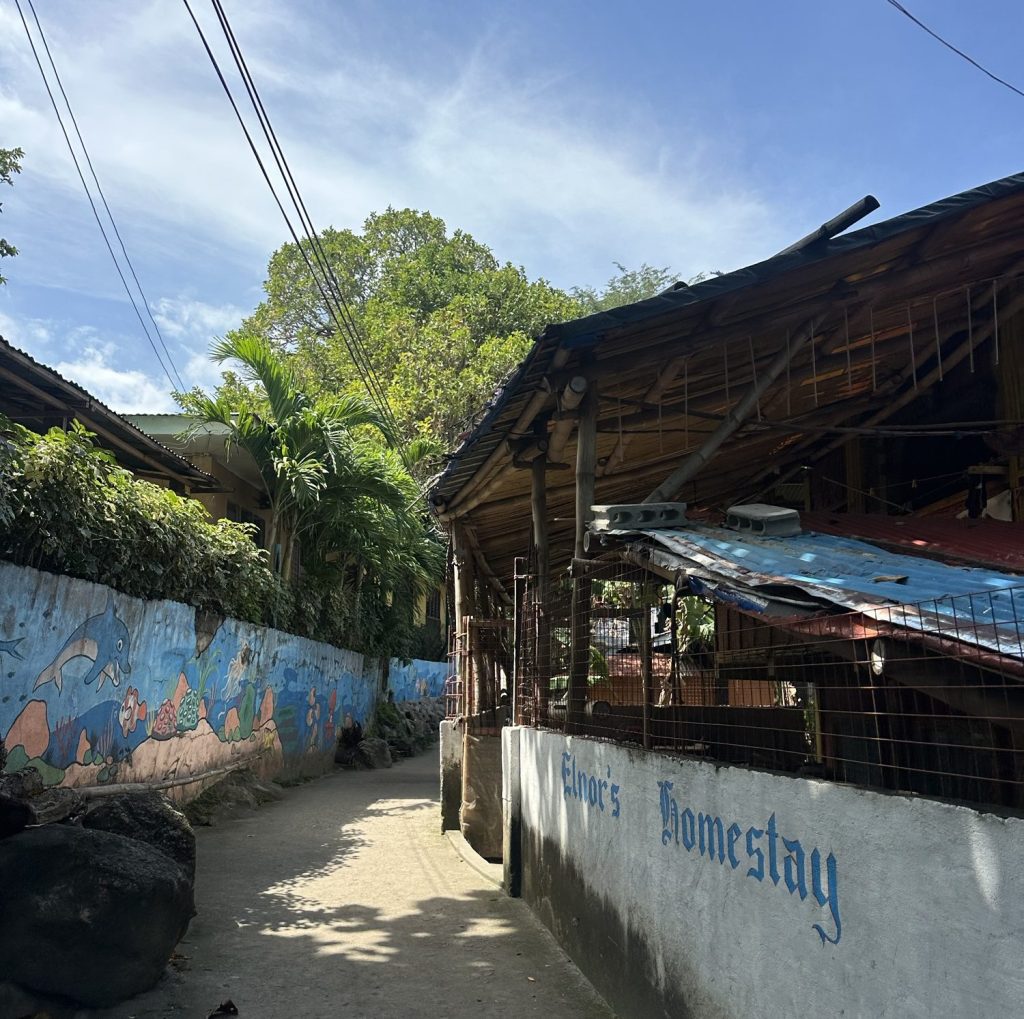
It is difficult to describe this homestay. It is basic, that is for sure but what makes this place amazing is the host. She is a very small human, with a big personality which mixes sass, humour and just general loveliness. She is happy to help with any questions regarding the island etc.
The accommodation consists of rooms with shared bathrooms. The room itself has a bed with a mosiquto net and a small outside space to hang drying. When we stayed the shared bathroom didn’t have running water and there was only bucket showers on offer. If you have travelled Asia you will know what I mean, if you’re going for the first time you will soon see what I mean. The bathrooms have these sort of baths filled with water – still unsure where the water comes from. But this water is normally used to flush a toilet that has no flush – so you use the bucket to fill the toilet for it to flush. However in Elnors we also used this to wash our hands, as there was no running water at all and to pour over ourselves for a shower. Not the most enjoyable shower but we still welcomed it after living in the sea the whole day. You will all be pleased to read that recent reviews suggest she now has running water in the bathroom though.
The stay includes breakfast and you can buy dinner, cooked by Elnor herself, for 250 (£3) pesos per meal. This includes meat and is therefore the cheapest place to eat on the island. Similar meals elsewhere cost 300 (£3.70) pesos. The portions for dinner were very big and very nice. Breakfast was very basic but for less than £7 a night (yes for both of us!!) you can’t complain that it is included.
Our second choice homestay was Ling Ling homestay which also has good reviews.
Be aware that there aren’t that many places to stay on the island and although we only booked last minute, there weren’t many options to left. So book early and take advantage of free cancellation if you end up changing your mind.
What To Do On The Island
Well, there isn’t an array of things to do due to the size of the island. The beauty of staying here is just to relax, appreciate the beautiful setting, see the amazing sea life and experience the local way of life.
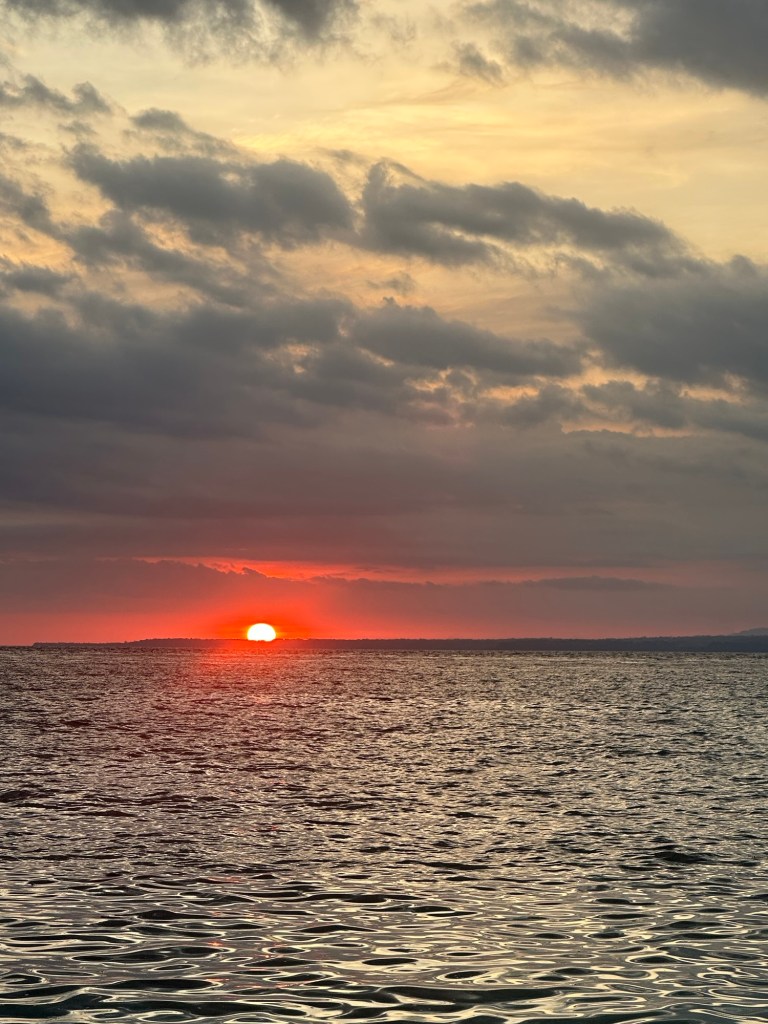
Our favourite activity was when the day trippers all leave around 3-4pm, the locals clock off from work and begin to go about their daily activites. This is when the true beauty of the island begins. Children come to the water and play in the sea after school, literally hanging from boats and jumping off. Local boats arrive back with stock from the main island – one evening we watched a group of locals lift a fridge off a boat which was very entertaining. At this time there is hardly any tourists left and you can just sit, taking it all in and enjoy the amazing sunset from the main beach. These sort of things you never see or appreciate in the day when tour groups come.
However, to fill your time during the periods when day trippers are there I can suggest a few activties. You will want to avoid the main beach and snorkel area between ‘peak times’ (10-3pm) as this will be busy – the main beach is where all the boats come in to and where you’ll get dropped off when you arrive on the island.
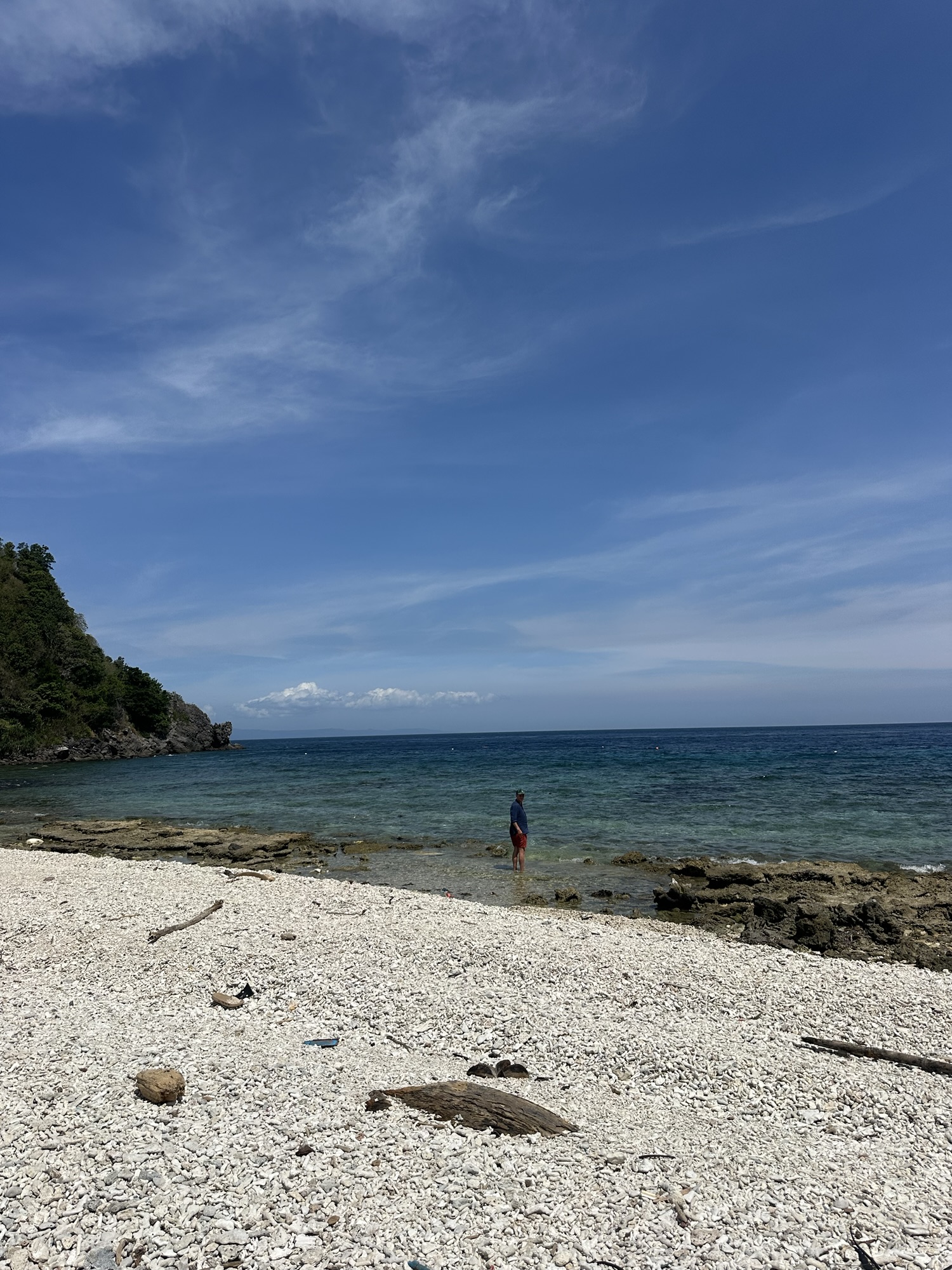
There is a small beach around the other side of the island that is a short walk from Elnor’s homestay. To reach here you just continue walking past Elnors homestay until you reach the beach. We visited here twice and we were the only people on the beach. The water was beautiful. We snorkelled here and managed to spot two/three turtles and plenty of nice looking coral. However while swimming we were approached by a man on a kayak saying we can’t swim to the right side of the bay as this is a protected marine area. It was nice to see they are protecting certain areas, to allow for restoration since the typhoon. Hopefully it will open back up soon.
Prepare your standards of beach cleanliness. If you have visited many ‘quieter’ ‘scheduled’ or ‘off the beaten track’ beaches in Asia, this tends to also translate to ‘more rubbish’. Sadly, a lot of Asian beaches unless cleaned or maintained by locals or governments are like this. Not necessarily from the locals but just the tide washes the rubbish up onto the beaches. Still beautiful but prepare to see some washed-up rubbish.
This is a nice spot just to chill while the day trippers are on the main beach on the island.
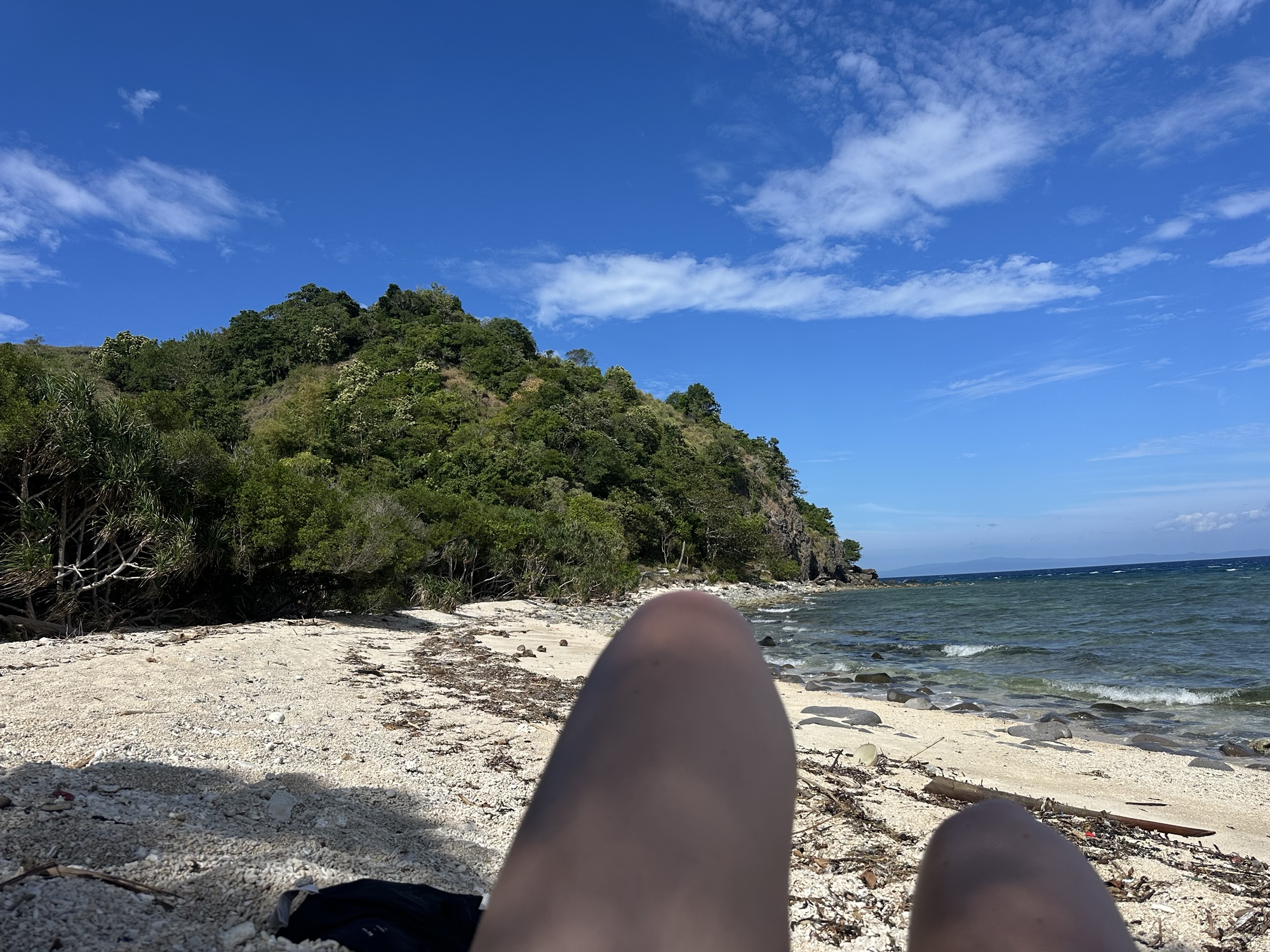
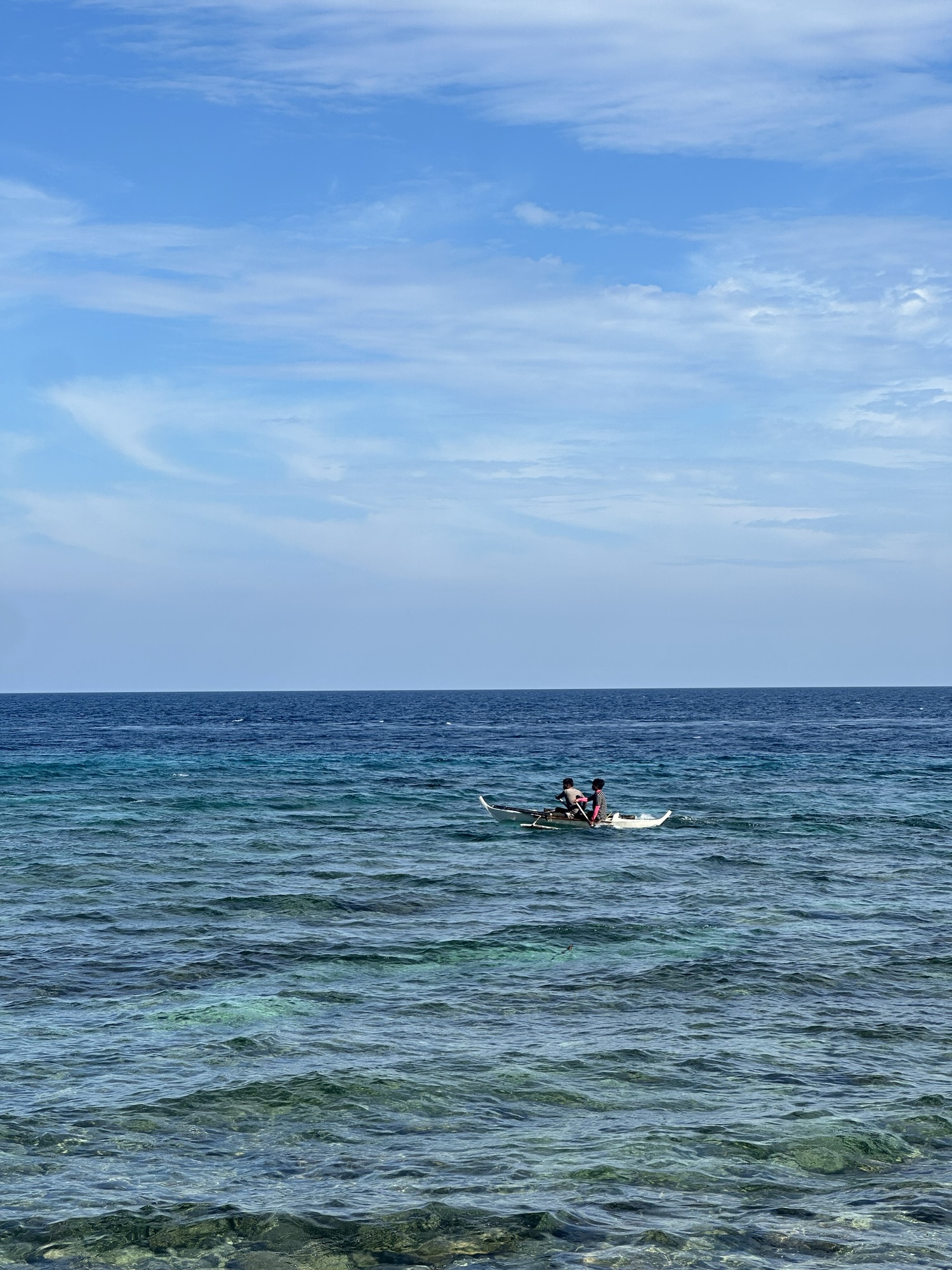
If you want to do a longer walk and explore some more beaches, instead of turning down the road of Elnors you can continue through the village and past the high school. Here you will climb some steep but well-maintained stairs. At the top you can go to the right and try to access a viewpoint, but it’s not very well maintained so hard to reach fully. I have linked this route on the footpath app (free app) below, it doesn’t show the exact paths but gives you a good idea:
https://footpathapp.com/routes/1109A200-C21B-4160-ADA6-4CB91EA46D92
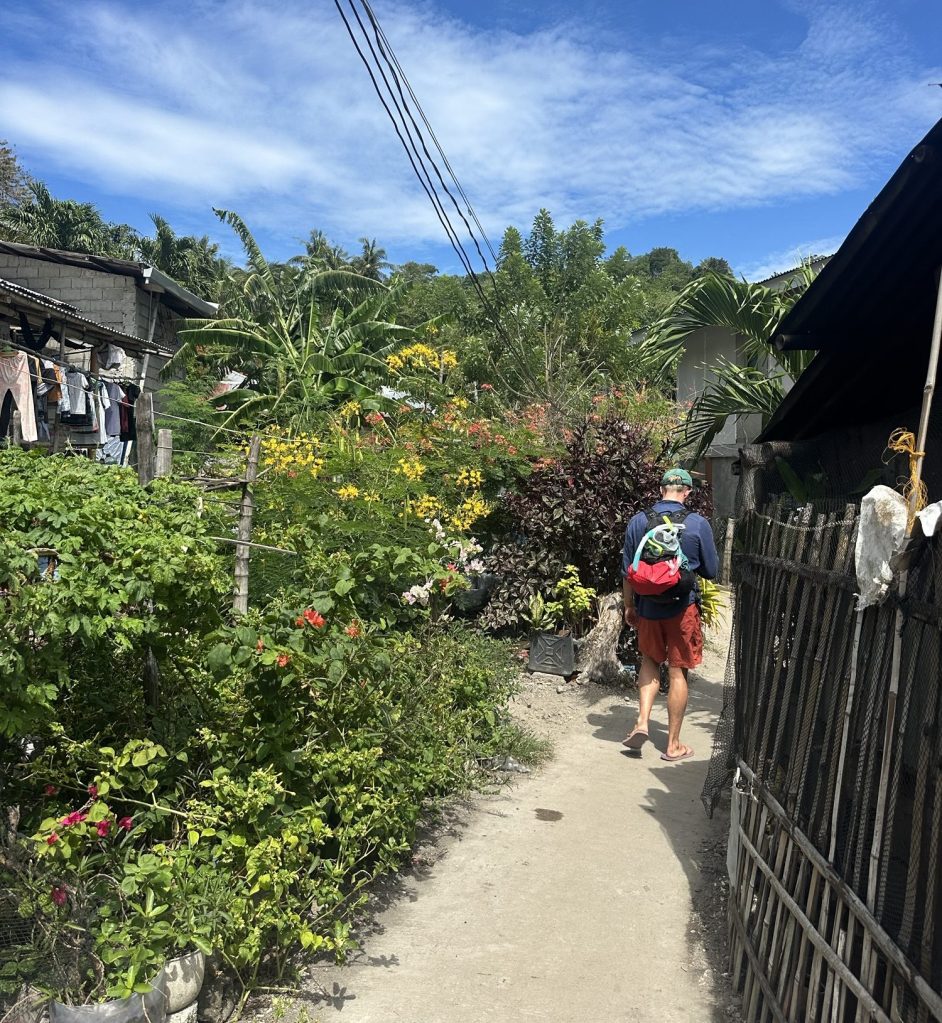
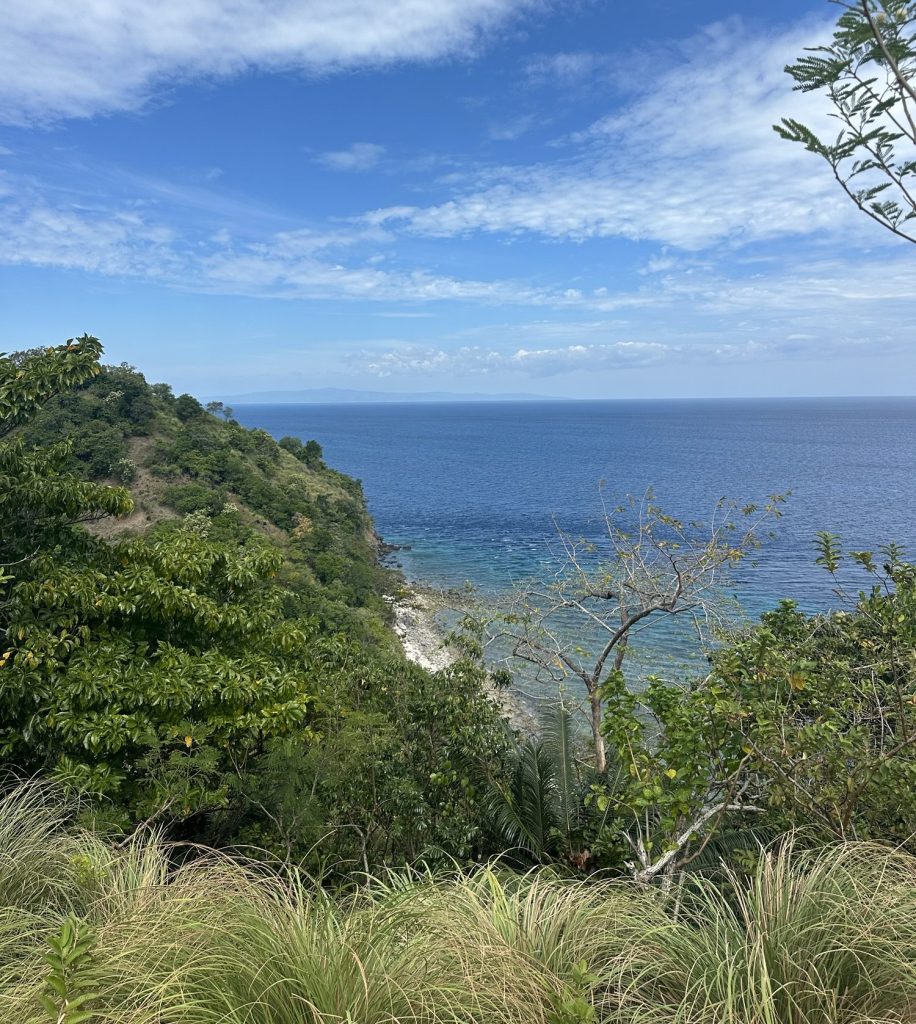
You will then go back down over the hill (still following the well made path) and come to some more stairs, here you turn right towards the beach. Along here you can keep right and walk along a board walk across the mangroves. Keep a look out for the resident birds as their colours come swooping around. You will then reach a little beach, similar to the other, again with nobody around. Perfect to enjoy some peace and quiet. One thing about the beaches on the island and with many in the Philippines is there is a lot of rocks/coral near the entrance of the water. When it’s low tide you can’t swim properly and risk damaging the coral and yourself. So don’t expect to be able to plumit into the beautiful blue waters.

From here you can extend your walk further by going up the second set of stairs (where you turned off to reach the mangrove board walk) and over to another small village area, smaller than the main township. It felt like this is where the locals live if they want to try and avoid the tourists. People were very smiley though and it is interesting to see the simple way of life here on the island. The beach is not as nice as the others so wasn’t worth hanging around for but if you want to get your steps in then why not extend it to this part.


There is a few convience stores on the island which you can get biscuits/ icecreams/ crisps etc. I would recommend trying some of the random things they sell, the watermelon ice creams were very nice. They also sell cheap beer, I would massively recommend the Smirnoff Ice moscow mule for a sundowner on the beach enjoying while enjoying the sunset. This is how we spent one of our favourite evenings in the Philippines.

Lastly, you can hire a boat driver who will take you to different snorkelling spots around the island that you can’t reach by walking the route detailed above. We got offered around 1200 peso for this by a local man who approached us. Speak to your homestay host or ask around to get a fair price. We didn’t do this as we wanted to just relax and enjoy the island but if we had an extra day I think we would have, just to see some other snorkel spots. He told us there was some places to see clown fish and star fish etc.
Do You Need A Guide?
The most popular thing to do on Apo Island is snorkel. This is what all the day trippers come to do, that or dive. It is often mentioned online as one of the best dive sites in the world, I can’t vouch for that as I don’t dive (there is a dive shop on the island).
So when you arrive on the island, assuming you don’t come as part of a tour, you will likely be approached by a man. Still unsure what this mans job is but I am thinking it is some sort of guide facilitator who shows you where to go to pay your environmental fee to the island and then will offer you a guide for snorkelling and general island exploring. When we said we were staying at a homestay he lost interest in his sales pitch and just pointed us in the right direction.
We had read online that it is mandatory to have a guide to snorkel here. However when we chatted to Elnor about it, we are not sure this is an offical requirement. She is in a difficult position as she lives on this small island where no doubt everyone knows everyone. Therefore, she can’t be seen to be telling the tourists ‘you don’t need a guide’. This was the general consensus we got from chatting to her. Not really black and white and we left still unsure on if we needed to have a guide or not.
From our time on the island, we have now concluded no you don’t need a guide to snorkel here. The main area for snorkelling is on the side of the island where all the boats come in and also right by all the resturants etc. Here there is a section marked out which is the ‘turtle area’. We snorkelled in this area and along the whole front in the morning and evening with no one approaching us to offer to be our guide. This was before the tourist boats arrived. We sort of had the approach that we will just swim, see what happens and if anyone approaches us or attempts to say ‘you must have a guide’ then we would get one. After all it seemed to be the way for a lot of locals to make a living. To be honest it felt they were more interested in dealing with the tour companies and the small amount of people that were here to stay were sort of left to our own devices. Which was perfect for us. The best time in our opinion to swim in the turtle area was the morning before about 9/10am and then the afternoon/evenings past 3/4pm. Outside these times all the day trippers are around this area and it’s a bit crowded in the water. Crowds weren’t too bad in March when we went, but I imagine if you went in peak time it could be worse.
We spoke to other people in our homestay who snorkelled on their own outside the bay and around the island. But be careful as there is no lifeguard service and if you’re on your own, no body will know where you are. Currents can change and be very strong.
Where To Eat
There is only a few options for food on the island and most main dishes were priced the same at 300 (£3.70) pesos per meal with meat or fish included.
As Elnors was cheaper we ate dinner both nights at hers.
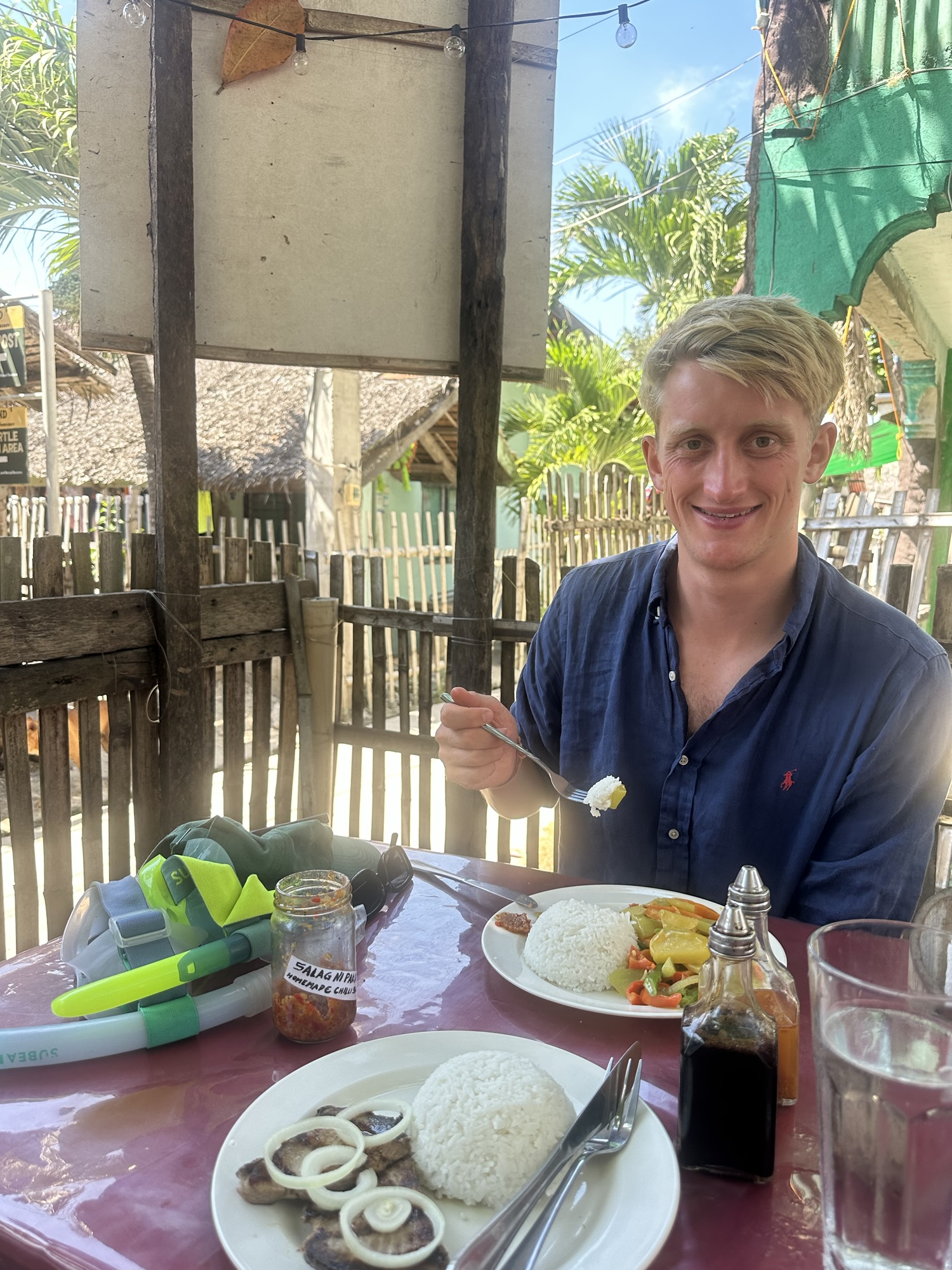
Our first lunch we ate at Salag Ni Pacdot. This was a beach shack that served smoothies, pancakes and main meals. The smoothies were delicious and the food really nice. The owners were super friendly too.
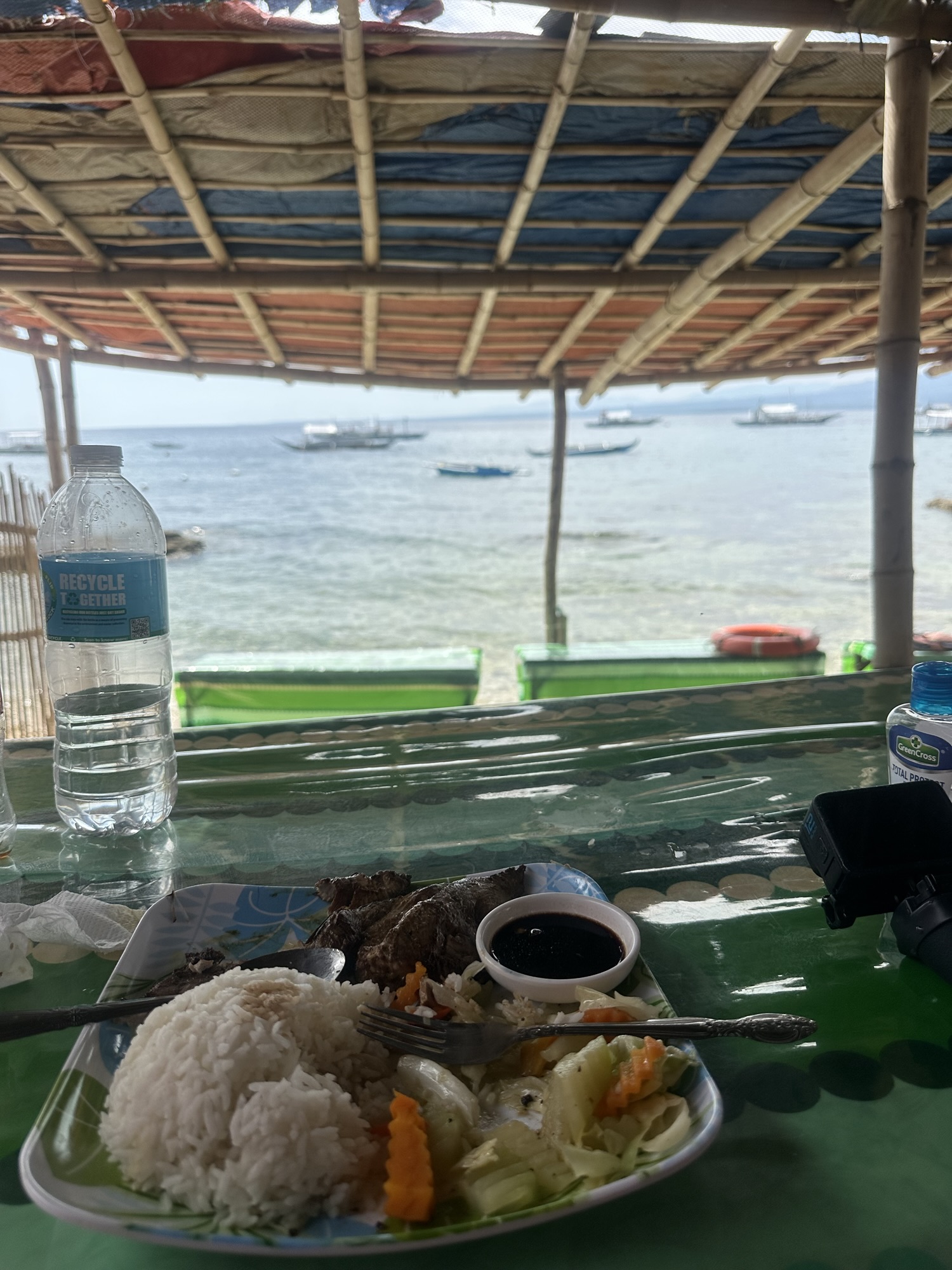
Our second lunch we ate at Nickys Resturant – you have to go down one of the little cracks between the buildings to come to this little resturant on the waters edge. Here we sat and ate fresh tuna with rice and veggies, watching all the turtles popping up out the water. This was actually our first glimpse of quite how many turtles you can see here, we spotted several while eating. They were so close I had to jump in with my snorkel before eating. The owners were laughing at me but were happy to watch our stuff while we snorkelled after eating.
Others we stopped at:
- Jimmys has a really good sunset view – we got a smoothie from here and it was very nice. You could get dinner or drinks here around sunset, which I imagine would be very nice.
- Bukana – this is a bar but we had a hot chocolate here one evening as I fancied something sweet and warming (yes even in the heat) and it was delicious.
So we basically managed to eat at every place in Apo Island while we were here but it was all delicious. Especially the fresh tuna. Maybe slightly higher prices but obviously still amazing value.
Things To Be Aware Of
There are a lot of stray dogs – which is not uncommon for the Philippines. Although thankfully they all looked fairly healthy for Philippines standards, plus there is a lot of dogs that are also owned by locals too. But be aware that they are very friendly and will want to say hello – I loved this but if you don’t want them then ignoring them tends to be fine. If you are visiting the Philippines in general I would recommend you get your rabies vaccines before you come. There are so many dogs and even if you don’t want to touch them sometimes they want to touch you.

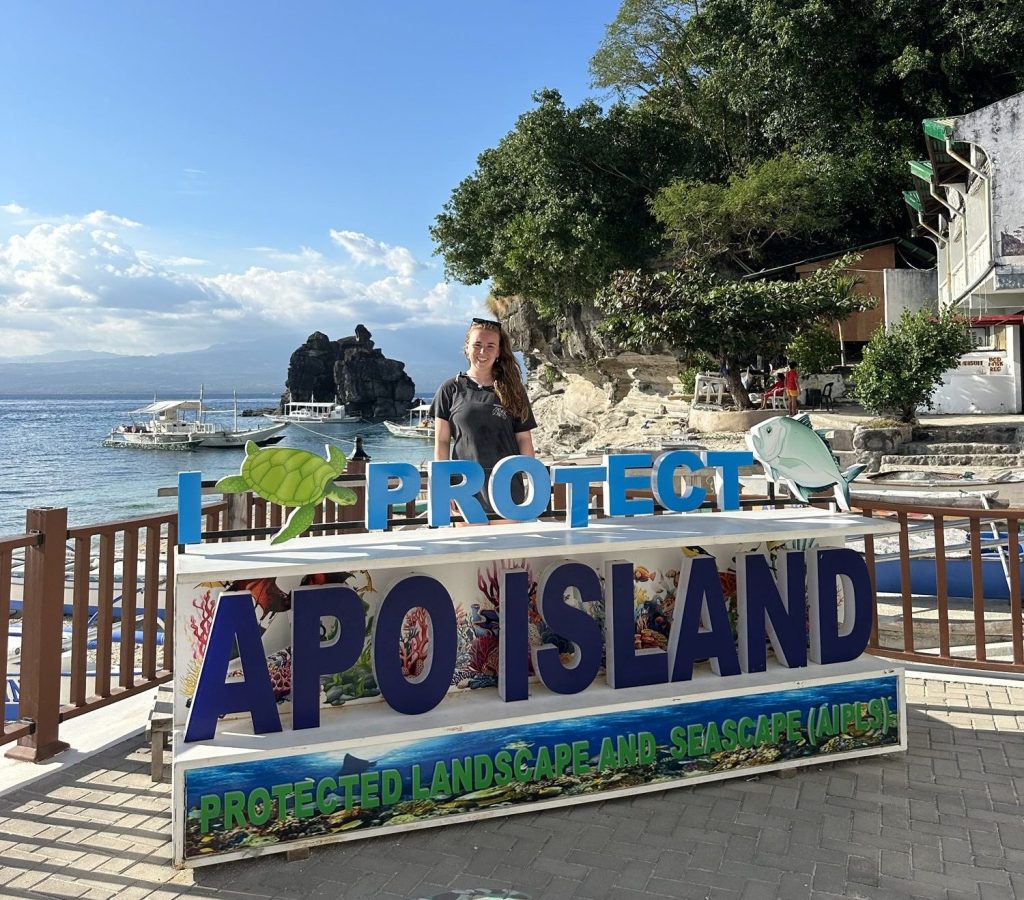
Please consider the enviornment when you visit this island and anywhere you go. Apo island is very well maintained, particularly the main town bit. It is clean and you don’t see locals chucking rubbish on the floor like you do in other areas of Asia. It is a National Park and atleast on the surface it looks well managed. HOWEVER, when we were snorkelling in more peak times we watched some guides with tourists and it wasn’t exactly very ‘respectful wildlife encounters’. We saw guides pushing tourists above turtles to get the ‘perfect’ shot as well a tourist and guide kick a turtle. This is actually an offense in the Philippines as you aren’t allowed to touch any marine animal. It made us feel a little less guilty about not using a guide as I do not want to be involved in this sort of animal tourism. This is part of a bigger picture here though – how are these guides trained? Who regulates them on this small island?
The bottom line is they want tourists to enjoy the area, see turtles, get the dream shot and therefore more tourists will come. Sadly this is a familiar theme across Asia as local guides rely on tourists for income, therefore more tourists = more income. But at what cost to the environment? This is why I believe as tourists we hold so much power to NOT support these sort of behaviours. Obviously still continue to support guides but maybe next time someone says ‘swim here really close and have a picture’, kindly say ‘no I prefer to give them the space they need’.
Luckily the turtles seem very unbothered by people. We were so suprised but when we were swimming, it’s as if you weren’t there. Even if you try to keep your distance they might choose otherwise and swim right past you. Just be mindful of them and their environment – don’t touch them or the coral.
I hope I have persuaded you to visit this tiny island in the Philippines.
 The Travelling Paige
Leave a comment